
Stress Fractures

Dr. Anthony DeMaria - Greater Cincinnati and Northern, KY Podiatrist

Stress fractures of the feet treated by Dr. Anthony DeMaria at Ability Foot and Ankle in greater Cincinnati.The bones in your foot are made up of a latticework of minerals known as “hydroxyapatite”; this combination of minerals is comprised of mostly calcium and phosphorus.

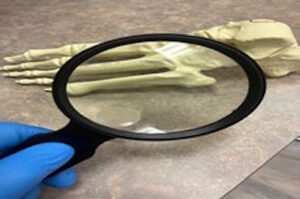
A stress fracture is a small crack or break in the latticework of the bone(s) in your foot; the break in the bone is so small that it is generally not readily seen on an x-ray.  When it is able to be observed on an x-ray, what is seen is typically the body’s reaction to the fracture, and not the actual fracture itself.  (Sometimes more advanced imaging such as an MRI is necessary to see the fracture).   Stress fractures will propagate into a “full-on” traditional bone fracture if left untreated.

What causes stress fractures and how would I know that I have one?

Unlike a “regular” fracture that occurs after an injury, a stress fracture(s) often presents with a more gradual onset of pain, usually worsened with activity to some area of the foot that occurs “out of the blue” and the patient may no recall injuring the foot. Similarly, the pain will typically go away with rest, only to come back with repeated activity. This can present with localized swelling or color changes to the skin around the area of pain to the foot.

What are some clues that my pain is a stress fracture?

Stress fractures can occur in patients with known deficiency in Vitamin D, or perhaps have a family history of Vitamin D deficiency, problems with parathyroid hormone (PTH), or osteoporosis. They are more often seen more in women and obese patients. Individuals who start new exercise programs or take on a new job that requires them to spend more time on their feet- often described as “too much too soon” phenomenon, (such as military recruits at bootcamp) will also see symptoms as well.

Some patients are more prone to developing stress fractures than others. For example, individuals with a “high arch” may experience increased stress fracture frequency because the architecture and alignment of their foot may cause increased or excessive pressure to their bones that often exceeds their body weight. This is usually amplified with level or type of activity.

What to do if you suspect a stress fracture……

Rest, activity reduction, and immobilization of the extremity are generally the first thing to consider.  Many people will try to use crutches or a knee roller scooter to assist with their ambulation needs.  Ice and elevation of the extremity are helpful, BUT please know that traditional NSAIDs (Ibuprofen, Naproxen, etc.) can actually delay healing.   There is also the potential for the problem to be something else that mimics a stress fracture. 

If symptoms persist, it is advised to make an appointment with Dr. DeMaria at Ability Foot & Ankle for an appropriate work up of the symptoms.